Merchandising: Making a Promotional Glass Pendant

In addition to writing, I make jewelry. So naturally in anticipation of PETDEMONIUM’s publication, I made a glass pendant of Donifur (the villain featured on the book’s cover).
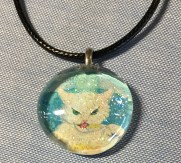
DonifurPendant

I wore the pendant the night I donated a copy of my book to my critique group, the DFW Writers Workshop. “Wow!” Rosemary exclaimed. “You have merchandise.” I do? I did? Right. Yes! I do! I immediately made several more pendants.

Here’s how.

You will need:PendantSupplies

  1. Large clear flat marbles (available at craft stores, many dollar stores, flower shops)
  2. Clear glittery nail polish
  3. Small paint brush
  4. Scissors
  5. Silver bale
  6. Mod Podge or Diamond Glaze
  7. Jewelry glue
  8. Black cord
  9. White paper (card stock weight)
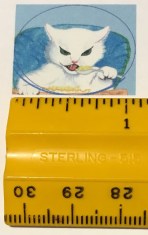
  10. An image sized to 1″ wide and 7/8″ high (approximately)

Step 1: The Image

Select an image to use for your pendant. Keep in mind that the final image will be less ImageSizethan an inch when resized and cut out in a circle. (Side note: I used Paint to draw a circle on it so it would be easier to cut out). In Word, I inserted the image and then resized it to 1″ by 7/8″. Print on regular paper. Place a large flat marble over the printed image to verify the sizing. When you are satisfied, print the image on white card stock. If you plan to make several pendants, copy and paste the image to create a full page. I was able to get about 40 images on a page.
Step 2: Cut out the Image and Adhere it to the Marble

Cut the image out. Since all marbles aren’t create equal, you may need to trim the picture a little to get the best fit. Generously coat the flat side of the marble with clear nail polish. Gently place the image picture side down on the marble and position it so it is centered. NOTE: Do Not press down. Doing so will squeeze the polish to the edges and create bubbles in the middle of the image. (Been there. Done that.) Let dry for several hours.

Step 3: The Bail

After the polish sets, use a drop of jewelry glue to attach the bale to the top center of the soon-to-be-awesome pendant. Let dry for several hours. (Yes, this is a recurring theme.)

Step 4: Seal the Back

Since the back is paper, it needs protection from sweat, water, dirt, etc. Using a small paintbrush, coat the back with Mod Podge or Diamond Glaze. Make sure to cover the edges of the paper image. Let dry for several hours. (Yes. Again.)

Step 5: Attach the Cord

Nuff said.

Step 6: Promote

Wear it. Sell it. Give it away as a prize. Include it with each book purchase. Use your imagination.

Now, you may be thinking, “Wow, Kay. That’s a lot of money to spend just to create one pendant — even though it is the BEST pendant ever.”

My answer is: “You’re absolutely right.”

The solution: mass produce them. Once you have all the supplies, making more pendants costs you practically nothing. You can buy 100 bails and 100 cords at a time. The Mod Podge lasts forever. So does the glue. A bag of glass marbles (about 25 of them) costs a dollar at, well, a dollar store. All together, I calculated that each of my pendants cost me around twenty-five cents.

I hope you have fun with this. I’d love to rejoice with you over the results. Please leave a comment below and let me know how it goes.


A special thanks to Rosemary Clement-Moore (author extraordinaire) for the ah-ha moment.
Just Read: “Watch Hollow” by Gregory Funaro

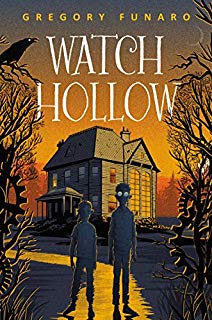
WatchHollowWatch Hollow by Gregory Funaro is (insert your favorite synonym for FANTASTIC here).
It’s a suspenseful novel told from alternating points of view, Lucy and Oliver Tinker. When their father is offered an enormous sum of money to repair a giant cuckoo clock, they relocate for the summer to Watch Hollow and move into an old mansion called Blackford House. Soon the entire family is thrust into the middle of a magical battle between good (Sunstone) and evil (the Shadow Woods). As the children accumulate clues to this mysterious and somehow living house, they discover they can only save themselves, their magical friends, and the house by pooling their knowledge and working together.

Fascinating. Fun. Unique. I loved how Funaro gently weaves themes of grief, communication, family, and the power of love into this charming (and charmed) story.

Delightful, imaginative, and threaded with magic and mystery, it’s one of those books I could read over and over again.


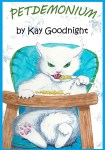
If you enjoy books like WATCH HALLOW, you will love my book PETDEMONIUM. Click here to download the first two chapters as a free PDF. 

PetdemoniumCoverEbookWBorder


FREE PROMOTION 

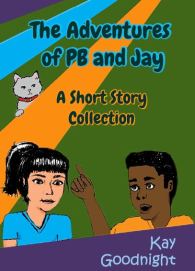
“Adventures of PB and Jay: A Short Story Collection”

PBNJShortStoriesCover


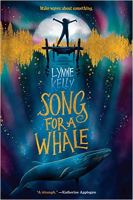
Just Read: “Song for a Whale” by Lynne Kelly

Song4aWhaleThis is a delightful tale about Iris, a deaf girl, who feels isolated from the world. Then she learns of Blue 55, a hybrid whale isolated from his own kind because his whale song differs from all the others. Although Iris and Blue 55 are miles (and oceans) apart, she immediately connects with the plight of this lonely whale and his inability to communicate with his own kind. So she embarks on an adventure and a mission to let Blue 55 know that at least one person in this large world hears him.

Lynne Kelly does an amazing job of telling the story from the point of view of Iris, with occasional side trips into the mind of Blue 55. The plot moves, the characters leap off the page, and the story is intriguing. More than a story about a deaf girl and a whale, it is about understanding, healing, and the importance of following your passions.

Although, I stumbled across Song for a Whale in the children’s section of my library, I highly recommend it as an engaging read for children of all ages, including adults (and maybe even a whale or two).


If you enjoy books like SONG FOR A WHALE, you will love my book PETDEMONIUM. Click here to download the first two chapters as a free PDF. 

PetdemoniumCoverEbookWBorder


FREE PROMOTION 

“Adventures of PB and Jay: A Short Story Collection”

PBNJShortStoriesCover


Forks and White Table Clothes: A ‘Dialogue Only’ Short Story

“Hello. My name is Renee. Thank you for dining with us this evening. May I offer you an aperitif, cocktail or beverage?”

“Tea for myself. My daughter will have milk.”

“With a lid and a straw, please. Mommy always gets mine with a lid and a straw.”

“Absolutely, Miss. I’ll be right back.”

“Quit tugging at your collar, Punkin.”

“But I don’t like this dress, Daddy. It’s itchy and these shoes are pinchy. Why do I got to wear them?”

“Because this is a nice restaurant. It’ll be fun. You’ll see.”

“McPlay Places are fun. They have slides and climbing tubes. If this is was a McPlay Place, I could take off these pinchy shoes.”

“People always wear their shoes here. Now quit squirming.”

“Yes, Daddy. Please don’t frown. Watch this. I can make the candle dance. I blow on it like this. Not hard like at a birthday party, but real soft. Are you watching? Do you see the candle dance?”

“That’s very pretty. Don’t get too close to the flame.”

“Daddy, why are there so many forks?”

“So you can use a clean one for each part of your meal. One for salad, one for your main course, and one for dessert.”

“Do I have to use ALL the forks?”

“No. You can skip some.”

“Good. I don’t like salad.”

“Your drinks, sir. Would you like me to describe our specials for this evening?”

“No, thank you. We just need a couple of minutes.”

“Daddy?”

“Yes, Punkin?”

“Did you used to come here with Mommy?”

“On special occasions.”

“Is this a special occasion?”

“Yes.”

“Why?”

“Because we both needed to get out of the house. Because being around other people is good for us. And because I’m here with you.”

“I like that last because.”

“Me, too. Now please stop blowing bubbles in your milk.”

“Oops. I spilled some.”

“Use your napkin.”

“I can’t. It’s folded up too pretty. It looks like a swan. Does it look like a swan to you? I love stories about swans. There was the one about the ugly duckling. And the one about the swan who lived on the lake but it was really a lady and the handsome prince had to save her. Do you know any more stories about swans?”

“No. Here. Use my napkin.”

“Daddy?”

“Yes, Punkin?”

“Can we ask the man for some crayons? I want to draw on the tablecloth. It’s nice and smooth and so white. I can draw you a pretty picture with flowers and birds and clouds until there isn’t any more white left. It will make you happy. Will you let me make you happy?”

“These tablecloths aren’t really made for little girls to draw on.”

“Oh.”

“Don’t kick the table leg.”

“That other place had white tablecloths, too.”

“What other place?”

“Where a man told us Mommy had gone to heaven.”

“Did it? I didn’t notice.”

“Have you made your selections, sir?”

“Yes. I’ll have the chicken cordon bleu. What would you like, Punkin?”

“A hamburger. And may I please have apples instead of French fries. I like the fries best, but Mommy likes for me to like the apples.”

“Of course, Miss. I’ll tell the chef right away.”

“Daddy, that man’s shoes look pinchy, too. Are they pinchy?”

“Probably.”

“Daddy?”

“Yes, Punkin?”

“I don’t like white tablecloths.”


A Kay Note

I originally wrote this story for a contest. Although I didn’t win, I loved the challenge of writing this story and highly recommend ‘dialogue only’ as a writing exercise. It’s an excellent method for developing a distinct voice for each character that doesn’t rely on ‘he said’ or ‘she said’ tags for clarification.

Writers are Like Race Car Drivers Because…

I enjoy car races. (They’re much more than waiting for the next crash.) Recently I attended a dirt track event with my family. At first, I focused on the top contenders. But as the evening progressed, my sympathies turned more and more toward those at the end of the field, those who tried hard and still failed. They got nudged out of position. Or skidded into a wall. Or couldn’t dodge a car that’d spun out of control. An engine blew. Or a tire. Or a brake line. Those poor drivers. All that work, all that money, all that time and travel, up in smoke in a second. What a waste. Why did they do it?

CarRace0915

My writer-sense answered. (It’s similar to spidey sense only less webby). It’s not always about the winning. Few people can do it. It takes a special talent. For those with that talent, racing is something they can’t live without. It is their passion.

Writing is mine.

And I’m not so different from a race car driver. I invest money in how-to books and workshops to fine tune my writing skills. I travel to conferences to meet agents, schmooze with editors, and glean wisdom from authors who’ve ‘won’. I practice. I write mornings, evenings, and at lunch. Sometimes the words tumble onto the page full-throttle. Other days my story goes nowhere, a 360-degree tailspin dangerously close to crashing and burning.

But I persist. I finish stories and novels and poems. Lots of them. A filing cabinet full of them. (Yes, I still print them out.) I experience a lot of spin-outs (form letter rejections) and fourth place finishes (loved your writing, but…). I also have some wins.

Below are five suggestions to keep in mind while you pursue your writing. (This isn’t a ‘step’ program, more like a numbered list of suggestions.)

  1. Practice. Write every day. Join a critique group. Listen to feedback with an ear for learning.
  2. Finish the race. Complete that novel or short story or poem.
  3. Research before submitting. If you’re a drag racer (flash fiction), don’t try to qualify for a 400-lap NASCAR race (novel trilogy). Match your work with the right agency or publishing house.
  4. Show up. You can’t win a race you haven’t entered. Editors and agents won’t knock on your door. You have to knock on theirs. Lots of them.
  5. Rejoice in your successes, small and large.

So, whether you’re a writer or race car driver, dancer or singer, teacher or accountant, follow your passion. Run a clean race. Put yourself out there. Take a chance. Follow a dream. Try. Celebrate every effort.

That’s a win.